

 Medically reviewed by
 Adenomyosis and Endometriosis both involve the abnormal growth of tissue resembling the uterine lining, they are distinct conditions. Both can cause severe menstrual pain, heavy bleeding, pelvic pressure, and fertility challenges, which often leads to confusion among women.
Understanding the differences between these two conditions is essential for accurate diagnosis, effective treatment, and better symptom management. These disorders can also coexist, which may worsen symptoms and negatively affect quality of life.
What is Endometriosis?
Endometriosis is a habitual condition where tissue analogous to the lining of the uterus grows outside the uterus. These implants may appear on the ovaries, fallopian tubes, bladder, bowel, diaphragm or pelvic wall. The towel reacts to yearly hormonal changes, thickens and bleeds internally. Since the blood has no way to exit the body, it causes inflammation, scar tissue and adhesions. Endometriosis is more common in youngish women, indeed teenagers, and frequently results in severe pelvic pain and gravidity.
What is Adenomyosis?
Adenomyosis is a gynecological condition in which endometrial glands and stroma the tissues that normally line the inside of the uterus abnormally infiltrate into the uterine muscle layer (myometrium). This leads to diffuse or localized thickening of the uterine wall, resulting in an enlarged, tender uterus and symptoms such as heavy menstrual bleeding, severe cramping, pelvic pressure, and chronic pelvic pain.
Crucial Differences Between Adenomyosis and Endometriosis
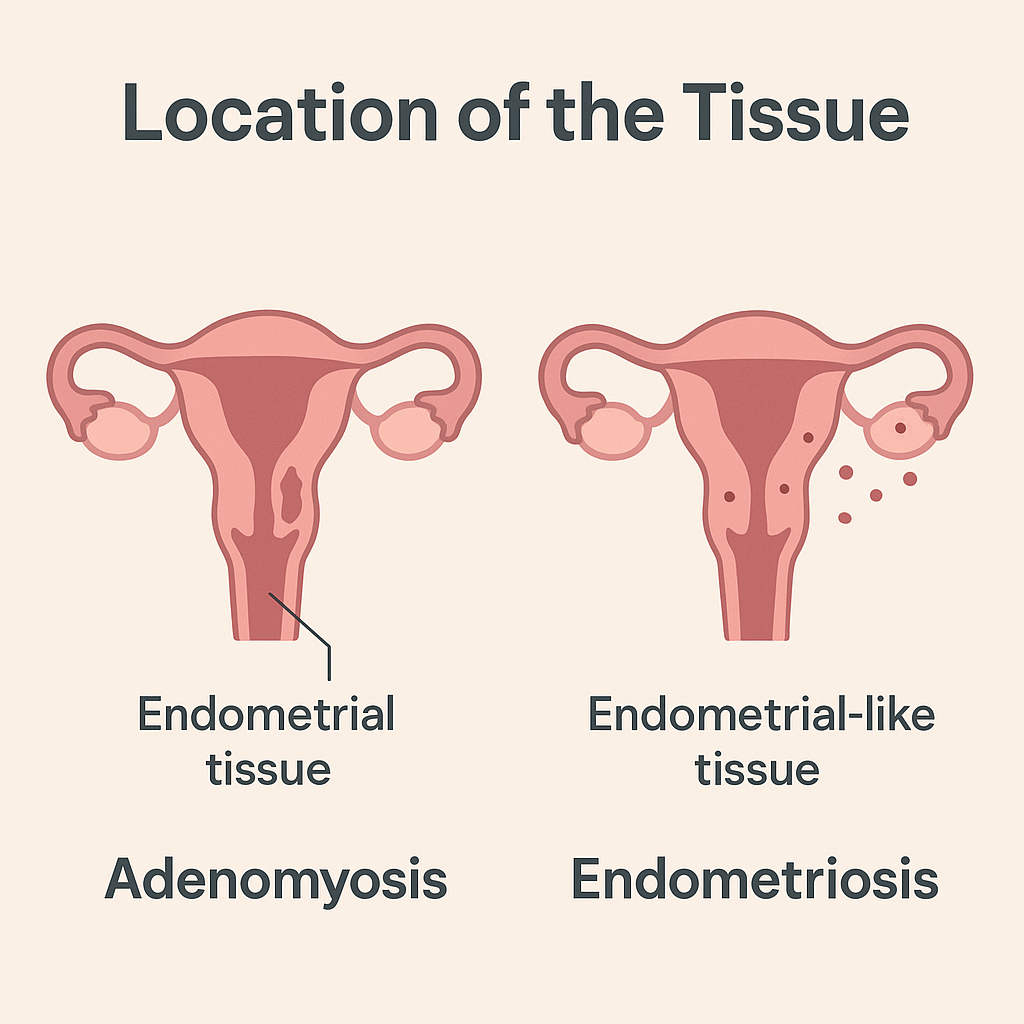
1. Location of the Tissue
- Adenomyosis: Endometrial tissue grows inside the uterine muscle (myometrium).
- Endometriosis: Endometrial-like tissue grows outside the uterus, such as on the ovaries, fallopian tubes, pelvic walls, bowel, or bladder.
2. Uterine Size
- Adenomyosis: Causes the uterus to become enlarged, soft, and tender.
- Endometriosis: The uterus typically remains normal in size.
3. Type of Pain
- Adenomyosis:
Pain is usually deep, heavy, pressure-like, and worsens during menstruation due to the muscle contracting around embedded tissue. - Endometriosis:
Pain is often sharp, stabbing, or burning, and may occur:- before and during periods
- during intercourse
- during bowel movements
- during ovulation
4. Menstrual Issues
- Adenomyosis:
More likely to cause very heavy menstrual bleeding, clots, and prolonged periods. - Endometriosis:
May cause irregular spotting, painful periods, but heavy bleeding is less common than in adenomyosis.
5. Fertility Impact
- Adenomyosis:
Can contribute to infertility, but generally less strongly than endometriosis. - Endometriosis:
More strongly linked to infertility, because it affects the ovaries, fallopian tubes, and pelvic environment.
6. Age Group
- Adenomyosis:
Common in women in their 30s–50s, especially after childbirth. - Endometriosis:
More common in younger women (teens to 40s).
7. Coexistence
Both conditions can occur together, making diagnosis more complex.
Symptoms
Symptoms of Adenomyosis
- Heavy menstrual bleeding, often with large blood clots
- Periods lasting longer than seven days
- Severe, cramp-like menstrual pain
- Chronic pelvic pain or discomfort
- Pelvic pressure or a feeling of heaviness
- Lower back pain, especially during menstruation
- Pain during sexual intercourse (dyspareunia)
- Abdominal bloating or a visibly enlarged lower abdomen
- Fatigue, dizziness, or weakness due to anemia from heavy bleeding
Symptoms of Endometriosis
- Pelvic pain that may be sharp, burning, or stabbing
- Pain that radiates to the lower back, hips, or thighs
- Pain that worsens before and during menstruation
- Pain during ovulation
- Pain during sexual intercourse (dyspareunia)
- Painful bowel movements (dyschezia)
- Constipation, diarrhea, or alternating bowel habits
- Nausea or gastrointestinal discomfort
- Pain during urination, especially during menstruation
- Blood in stool or urine in severe cases
- Chronic fatigue
- Abdominal bloating or pelvic fullness
- Infertility or difficulty conceiving, even with minimal pain
Causes and Risk Factors
The exact causes of adenomyosis and endometriosis are not fully understood, but several factors are believed to contribute:
- Retrograde menstruation: Menstrual blood flowing backward into the pelvic cavity may contribute to the development of endometriosis.
- Genetics: Women with a family history of endometriosis or adenomyosis have a higher risk.
- Hormonal imbalance: Elevated estrogen levels can increase the likelihood and severity of both conditions.
- Uterine surgeries: Procedures such as C-sections, fibroid removal (myomectomy), or dilation and curettage (D&C) may increase the risk of adenomyosis by disrupting the uterine muscle.
- Chronic inflammation and immune dysfunction: Persistent inflammation or impaired immune response may prevent the body from clearing misplaced endometrial cells, contributing to both conditions.
- Lifestyle and environmental factors: Stress, poor diet, and exposure to environmental toxins may worsen symptoms or increase susceptibility.
- Autoimmune factors: Autoimmune or immune system dysfunction may play a role in the development and progression of endometriosis and adenomyosis.
How Croakers Identify Both Conditions?
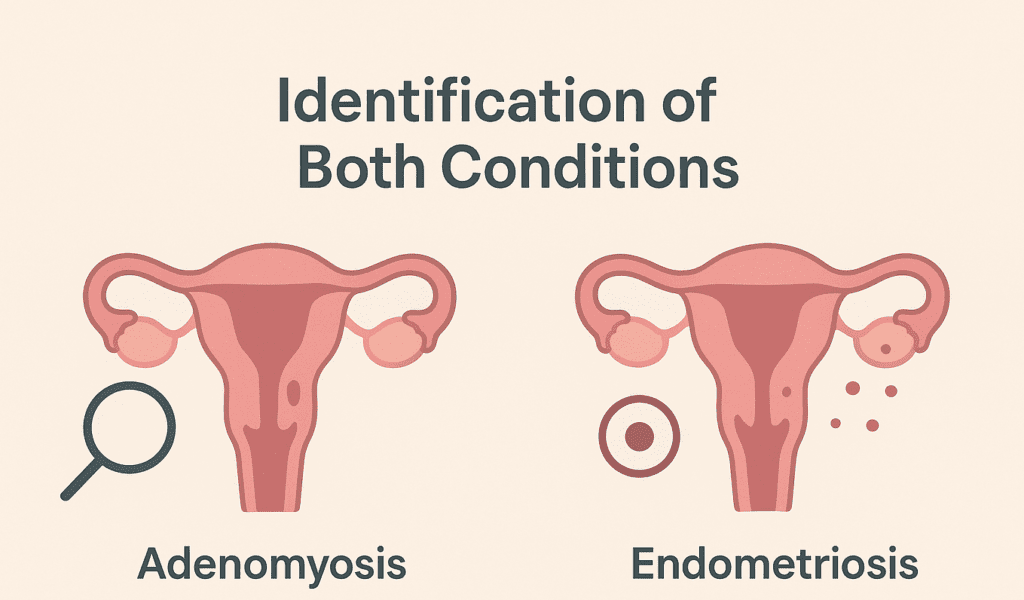
Diagnosing adenomyosis and endometriosis is gruelling because symptoms lap with fibroids, pelvic seditious complaints and abnormal bowel pattern. Pelvic examination may reveal tenderness or an enlarged uterus. Ultrasound and MRI can help diagnose adenomyosis by showing thickened uterine walls. Endometriosis may appear on ultrasound only if excrescencies are present. The most accurate system to diagnose endometriosis is laparoscopy, where a small camera is fitted into the tummy to visualise implants and adhesions.
Numerous women stay times for opinion because they’re told their pain is normal. Beforehand evaluation is important to help prevent progression and complications.
Treatment
Options for Adenomyosis
Treatment depends on inflexibility, age and fertility pretensions. Pain specifics, anti-inflammatory medicines and hormonal treatments similar to oral contraceptives, progestin remedy and hormonal IUD help reduce bleeding and pain. In severe cases, croakers may recommend uterine artery embolization or hysterectomy, especially if fertility is no longer an option. life changes like exercise, heat remedy, stress operation and anti-inflammatory diets are helpful for symptom control.
Options for Endometriosis
Endometriosis treatment aims to reduce pain, remove implants and ameliorate fertility. Hormonal remedy helps suppress estrogen and slow complaint progression. Laparoscopic surgery is the most effective treatment for removing excrescencies, adhesions and deep lesions. Fertility treatments similar to ovulation induction, IUI and IVF may be needed to achieve gestation. Post-surgery follow-up, diet and life support are essential to maintain long-term relief.
Adenomyosis and Endometriosis Together
Many women can have both adenomyosis and endometriosis simultaneously, which often leads to more severe symptoms. These may include heavier menstrual bleeding, more intense pelvic pain, chronic pelvic pressure, and increased difficulty with fertility.
Diagnosis requires careful evaluation using imaging techniques such as ultrasound or MRI, and in some cases, laparoscopy may be necessary to confirm endometriosis and assess the extent of disease.
Management of coexisting conditions typically involves a combination of treatments, including:
- Hormonal therapy to reduce pain and control menstrual bleeding
- Surgical intervention to remove lesions or affected tissue when necessary
- Lifestyle modifications such as dietary changes, stress management, and regular exercise to help alleviate symptoms
A personalized treatment plan is essential, as symptom severity and fertility goals vary among women.
Living with Chronic Pelvic Pain
Both conditions affect emotional and internal well-being. Habitual pain frequently leads to stress, anxiety, depression, sleep problems and reduced productivity. Support groups, comforting, awareness and regular exercise are important for managing. Women should no way ignore severe menstrual pain. Beforehand opinion can help prevent complications such as anaemia, organ damage or gravidity.
Anti-inflammatory diets rich in omega-3 fats, lush flora, gusto, turmeric, nuts, seeds and whole grains reduce pain and inflammation. Avoiding reused foods, alcohol, caffeine and red meat may also help.
Conclusion
Women who witness pelvic pain, heavy bleeding, pain during intercourse or difficulty conceiving shouldn’t ignore the signs. Partnering with a gynaecologist who has moxie in reproductive health and habitual pelvic pain is essential. With growing mindfulness, better individual tools and substantiated treatment, numerous women with adenomyosis or endometriosis can achieve symptom control, fertility support and bettered long- term well- being.
FAQ’s
1. What’s the main difference between adenomyosis and endometriosis?
Adenomyosis occurs when the endometrial tissue grows inside the muscle of the uterus, while endometriosis occurs when tissue grows outside the uterus on organs such as the ovaries, tubes or bowel.
2. Can both conditions beget gravidity?
Endometriosis has a stronger link with gravidity because it affects reproductive organs directly. Adenomyosis may also reduce fertility by affecting implantation, but numerous women still conceive.
3. How are they diagnosed?
Adenomyosis is diagnosed through ultrasound or MRI, showing thickened uterine muscle. Endometriosis is stylish diagnosed through laparoscopy, which allows visualisation of implants and adhesions.
4. What treatments are available?
Treatments include hormonal remedies, pain operations, life changes and surgery. Adenomyosis may require hysterectomy in severe cases. Endometriosis frequently needs laparoscopic excision.
5. Can diet help with symptoms?
Yes, anti-inflammatory foods, hydration and supplements like omega-3 and magnesium help reduce pain and inflammation. Reducing reused food, sugar, and caffeine also improves symptoms.
6. Are painful ages normal?
No, Severe menstrual pain isn’t normal and may be a sign of adenomyosis or endometriosis. Women should consult a gynaecologist for proper evaluation.