

 Medically reviewed by
 Pregnancy is a happy and anxious period, which is accompanied by increased attention, in particular, to the diet. A lot of pregnant women are advised against eating certain foods that are dangerous to their unborn babies. Most of the recommendations are quite sound (such as not eating some fish rich in mercury, unpasteurised milk, raw meat, etc.), the issue of which fruits to avoid is likely to create confusion (i.e. why not to eat fruits that prevent miscarriage).
Researches indicates that a fruit and vegetable-based diet can lower the risk of miscarriage: a review has found a high level of fruit intake to be approximately 61% lower than low intake in terms of the risks of miscarriage.
It does not mean that you should never eat fruit, but just that you should exercise care with some fruit and the circumstances of eating, of over-ripeness, sanitation, and temperature.
Reason of Fruits that Concern in Pregnancy
Most fruits are healthy (vitamins, minerals, fibre, hydration), it has some reasons some fruits can cause an issue during pregnancy the first trimester (when the risk of miscarriage is greater) in particular:
1. Uterine Contractions/Softening of the Cervix
Certain fruits are said to have enzymes or compounds that may cause the uterine muscle to go into labour or the cervix to become soft, and this theoretically would lead to early labour or even greater chances of miscarriage. An example is that unripe papaya has latex and papain, and pineapple has bromelain.
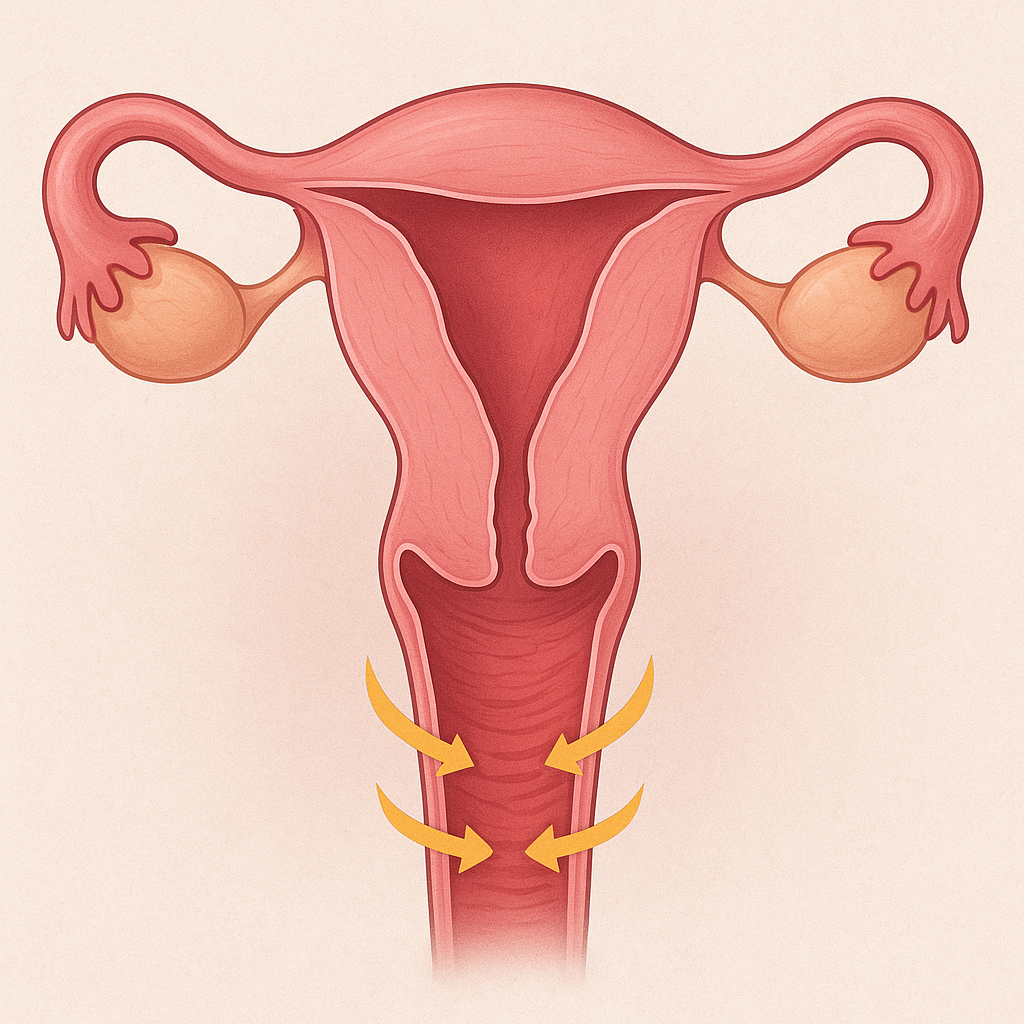
The human evidence however is poor; it is mostly theoretical or those conducted with animals; many experts believe that the risk is minimal when fruits are taken in moderation.
2. Risk of Contamination/Food Poisoning
Any unwashed or bacteria-contaminated (e.g. Listeria, Salmonella) or contaminated-contact fruit (or food) may be dangerous. National Health Service (NHS) stresses that miscarriages may be more common in case of food poisoning by bacteria.
There is a high risk of improperly cut and stored fruits, and those that have not been washed properly and kept at room temperature.
3. Sugar High/Glycaemic Load High/ Excessive Consumption
Certain fruits (dried fruits, fruit juices, or large portions, especially) can cause excessive sugar consumption, thus worsening gestational diabetes or excessive weight gain. Although it does not cause miscarriage directly, it may cause complications.
4. Myth versus Evidence
It is worth pointing out that most lists of fruits which should not be eaten when pregnant are rooted in tradition, anecdote or even theory of risk as opposed to concrete human evidence. As an example, the site Fruits and Fruits That May Trigger Miscarriage: Myth or Truth? Explains that some foods, such as papaya, pineapple, and mango, taken in moderation are healthy during pregnancy, but unripe papaya is not.
Fruits List
A list of such fruits that frequently appears in guidance on pregnancy diets, the supposed danger of these foods, and evidence on the same are given below.
Papaya
Possible Risk Factors: Unripe or semi-ripe papaya contains latex and an enzyme known as papain, which can cause the uterine contractions or weakening of fetal membranes. There are some sources which imply a higher risk of miscarriage.
What Evidence Says: Ripe papaya is healthy in pregnancy, although the unripe one must be avoided according to the article, myth or truth.
There is also the opinion of another source that even the skin and seeds of ripe papaya can be unsafe.
Instruction: When you actually feel like consuming papaya, you must pick a totally ripe papaya (yellow/orange, sticky and soft) and not the unripe/green papaya. Better still, seek advice with your doctor in case you have any complications.
Pineapple
Accused Risk: Pineapple has the enzyme bromelain which can make the cervix soft, resulting in early labour/miscarriage when ingested in large amounts, particularly at an early stage of pregnancy.
What the Evidence Claims: It is said by numerous sources that moderate consumption is often harmless, but consuming significant amounts, particularly juices, can be a more dangerous affair.
Recommendation: Pineapple may not be recommended during the first trimester, particularly fresh juice types (which increase the enzyme concentration). It is probably okay to eat normal amounts of fruit portions.
Grapes
Alleged Risk: A few sources advise that grapes are not safe during pregnancy, as they are said to create heat in the body (traditional folk) or as some types of grapes have resveratrol in concentrated forms that might cause issues.
What Evidence Says: A more recent report is that grapes are usually safe when consumed in moderation and contain healthy nutrients.
Recommendation: Grapes are probably safe, but have to be well-washed (to eliminate pesticides/residue) and used in moderation. In case of gestational diabetes or high sugar levels, check the portion sizes.
Mango
Possible Danger: According to certain folk medicine, mango (or more precisely, unbaked mango) can raise the amount of heat in the body, or in some traditions, the impurities, and should therefore be avoided during early pregnancy. Others include mango with papaya/pineapple.
What Evidence Says: The scientific evidence of ripe mango causing miscarriage is lack lustre. Actually, mango is a good source of vitamins such as A and C and B6. According to the article titled, The Myth or Truth, mango is healthy in moderate quantities.
Instructions: Select a mango that is already ripe, make sure it is washed, cut it in a proper amount and do not use unripe/raw mango when you get to feel it makes you uncomfortable (e.g., acidity, indigestion).
| Fruit | Why the Concern | Practical Suggestion |
| Unripe/green papaya | Latex/papain enzyme might stimulate contractions. | Avoid unripe papaya. When you eat papaya, you should take a fully ripe fruit and observe to see whether it is contracting or not. |
| Pineapple juice / large amounts of pineapple | Bromelain enzyme may soften the cervix or stimulate labour. | Restrict pineapple consumption (first trimester, particularly). Use small fresh pieces as opposed to large juice portions. |
| Raw mango/very unripe mango (in certain | Acid, “heat” effects in the body; though not strongly evidence-based. | In the case of mango, make sure that you eat it when it is ripe, washed, and that the quantity is not too much. |
| Fruit with high bacterial contamination risk (e.g., unwashed or cut-stored fruits) | Risk of food-borne illness (Listeria, Salmonella), which may result in miscarriage. | Wash fruit carefully always; do not use fruit of uncertain/unhygienic origin; do not buy fruit juices/smoothies with hawkers whose hygiene is doubtful. |
| Very high sugar fruits/juices / dried fruits (if gestational diabetes risk) | Blood sugar spikes may affect pregnancy health (though not directly cause miscarriage | Be aware of portion size; pay attention to dry whole fruits; night not huge amounts of sweetened dried fruits, juices. |
Fruits During Pregnancy: Best Practices and Guidelines on Safe Consumption
To get the advantage of fruits during pregnancy without taking unnecessary risks, here are some practical principles you may observe:
1. Goal of 2-3 Servings of Fruits Daily
- One of the articles states that expecting mothers should strive to consume 2-3 portions of fruit every day and make them different.
- Good practice and guidance on safe consumption of fruits during pregnancy.
- To reap the advantages of fruits during pregnancy without exposing yourself to too much danger – here are the recommendations which your readers (and yourself) may reasonably adopt
- Use whole and fresh fruits instead of high volumes of juice or dry ones.
- Whole fruits contain fibre content, are to be chewed, and are slower to be absorbed. Juices Fruit juices are easily lost and can contain a lot of sugar and calories.
2. Wash all Fruits Thoroughly
Eliminate dirt, pesticides, bacteria. Particularly, when expecting as there is a heightened risk of food-borne diseases.
3. Allow the Fruit to Ripen Before Picking or Picking of Unripe Fruit which can be more Risky (with certain fruits)
As was mentioned, in the case of such fruits as papaya, mango, perhaps pineapple, unripe varieties can pose extra enzyme/latex danger. Make sure that the fruit is well ripe.
E.g. Papaya: no green/semi ripe; Pineapple: go with normal ripe slices as opposed to very overripe/super juicy.
4. Eat, but not too Much; Feast not too Much
- Even harmless fruits may have their problems when they are taken in large quantities: sugar content, indigestion, nausea, etc.
- Some fruits can lead to GI upset (in particular, during the first trimester, when nausea is a common issue), so it is prudent to select soft ones.
5. Take into Account your own Risk Factors for Health
- You might also require additional care in case there is a history of miscarriage, preterm labour, cervical problems, or gestational diabetes.
- Discuss personalised advice with your obstetrician/gynaecologist.
- And, too, in case you are allergic to some fruits, or you have just had food poisoning, so to speak, then make some changes.
Fruits to Use and Amount to Use
Here are Some Examples
| Fruit | Key Benefits During Pregnancy | Nutrient Highlights | Recommended Intake (%) |
|---|---|---|---|
| Bananas | Easy to digest, helps with nausea and constipation relief | Carbohydrates, Potassium, Fiber, Vitamin B6 | 10–15% of daily fruit intake |
| Oranges / Citrus Fruits | Boost immunity, support hydration, and aid iron absorption | Vitamin C, Fiber, Antioxidants | 10–15% |
| Apples / Pears | Gentle on the stomach, help regulate digestion, and maintain blood sugar levels | Fiber, Vitamin C, Natural Sugars | 10–15% |
| Berries (Strawberries, Blueberries, etc.) | Rich in antioxidants, support cell repair and immunity | Antioxidants, Vitamin C, Fiber | 10–15% (ensure they’re well-washed) |
| Watermelon | Excellent for hydration and reducing swelling during hot weather | Water content (90%), Vitamin A, C, Magnesium | 10–15% |
| Avocado | Supports fetal brain and tissue development; relieves leg cramps | Healthy Fats, Folic Acid, Potassium, Vitamin E | 10–20% |
| Kiwis, Melons, Pomegranate | Boost energy, blood circulation, and digestion when eaten fresh and sparingly | Vitamin C, Folate, Antioxidants, Fiber | 5–10% |
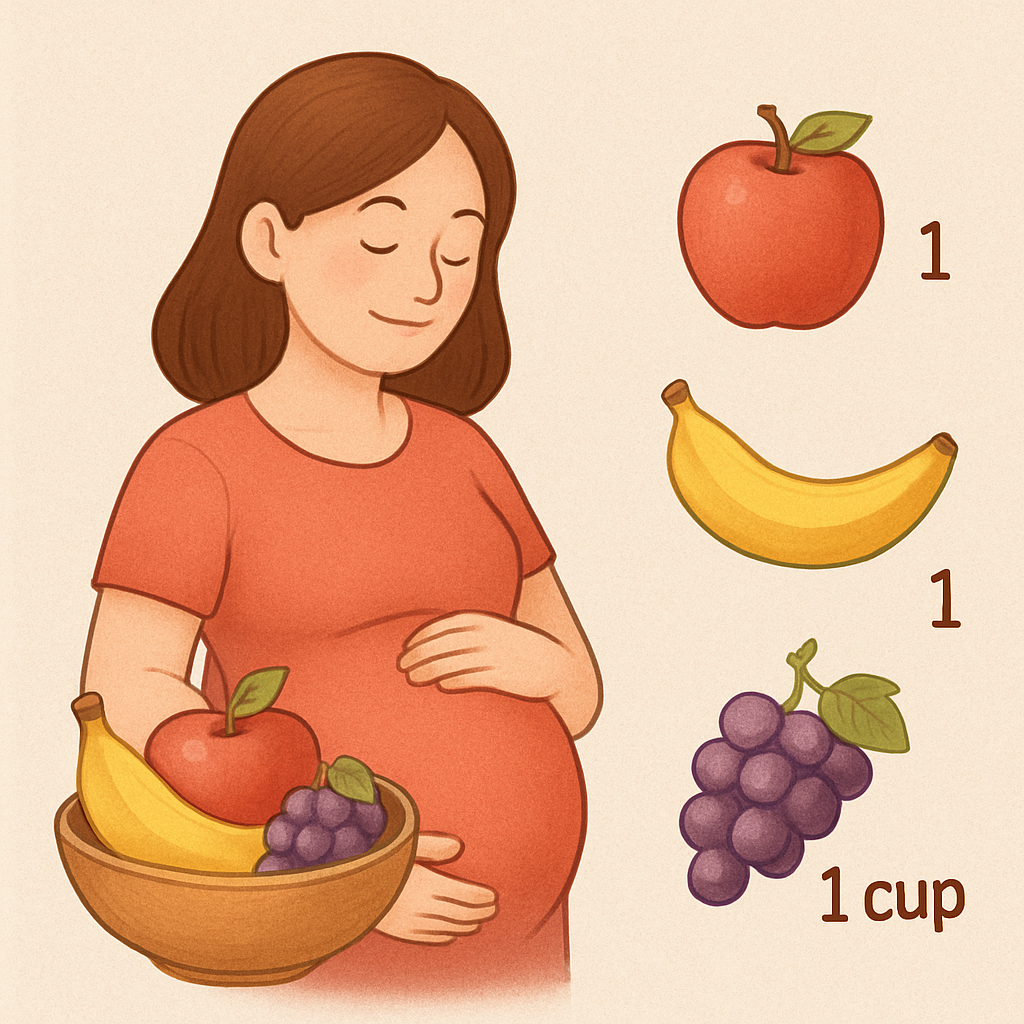
Showing approximate nutrient composition (%) of each fruit per 100 g (based on standard nutritional data).
| Fruit | Carbohydrates (%) | Fiber (%) | Vitamin C (%) | Potassium (%) | Folic Acid (Folate) (%) | Healthy Fats (%) | Water Content (%) |
|---|---|---|---|---|---|---|---|
| Banana | 23% | 2.6% | 15% | 8% | 6% | 0.3% | 74% |
| Orange / Citrus Fruits | 12% | 2.4% | 89% | 5% | 8% | 0.2% | 86% |
| Apple / Pear | 14% | 2.8% | 9% | 4% | 1% | 0.2% | 84% |
| Berries (Strawberry, Blueberry) | 14% | 2.4% | 70% | 2% | 4% | 0.3% | 85% |
| Watermelon | 8% | 0.4% | 17% | 2% | 1% | 0.2% | 91% |
| Avocado | 9% | 6.7% | 17% | 10% | 20% | 15% | 73% |
| Kiwis | 15% | 3% | 154% | 6% | 7% | 0.6% | 83% |
| Melon (Cantaloupe / Honeydew) | 9% | 0.9% | 61% | 4% | 3% | 0.1% | 90% |
| Pomegranate | 19% | 4% | 17% | 7% | 10% | 1.2% | 77% |
Notes:
- Percentages are approximate daily value contributions per 100 g serving.
- Vitamin C % is based on an adult daily requirement of ~90 mg.
- Folic acid % is based on a daily requirement of 400 µg.
- “Healthy Fats” mainly refer to monounsaturated fats.
Portion Suggestion Examples
- Breakfast: 1 large banana + a handful of berries.
- Mid-morning snack 1 orange or 1/2 slice of melon.
- Evening: a little apple after the supper.
- This gives about 2–3 servings.
When to Consult the Doctor
- Seek medical attention immediately, in case you experience some of the following:
- Bleeding or spotting after consuming a fruit which you did not know about.
- The cramping or contractions began shortly after eating a specific food.
- Food-borne illness (fever, vomiting, diarrhoea) following the consumption of fruits or any other foodstuff.
- In case of such risk factors as cervical incompetence, previous miscarriage, high-risk pregnancy: request your OB/GYN to design a specific diet and even avoid borderline fruit products altogether.
Conclusion
Fruits are an essential part of a healthy pregnancy diet, offering vital vitamins, minerals, fiber, and hydration that support both mother and baby while helping reduce potential risks like miscarriage when consumed wisely. However, moderation, cleanliness, and ripeness are key as certain fruits like unripe papaya or excessive pineapple may pose mild risks in specific circumstances. The focus should be on balance and safety, not fear; most restrictions stem from traditional beliefs rather than strong scientific evidence. Therefore, pregnant individuals should enjoy a variety of fresh, clean, and ripe fruits in moderate portions, keeping in mind personal health conditions such as gestational diabetes, and consult healthcare providers when in doubt.