

 Medically reviewed by
 I see it every week in my clinic. A patient walks in, usually in their late teens or early twenties, looking exhausted, holding their jaw, and saying some version of the same thing: “I thought it would just go away on its own.”
If you are searching for infected wisdom tooth symptoms, you are probably already in some level of discomfort, and I want you to have the clearest, most honest answer possible.
First, Let’s Get Clear on Why Wisdom Teeth Get Infected So Easily
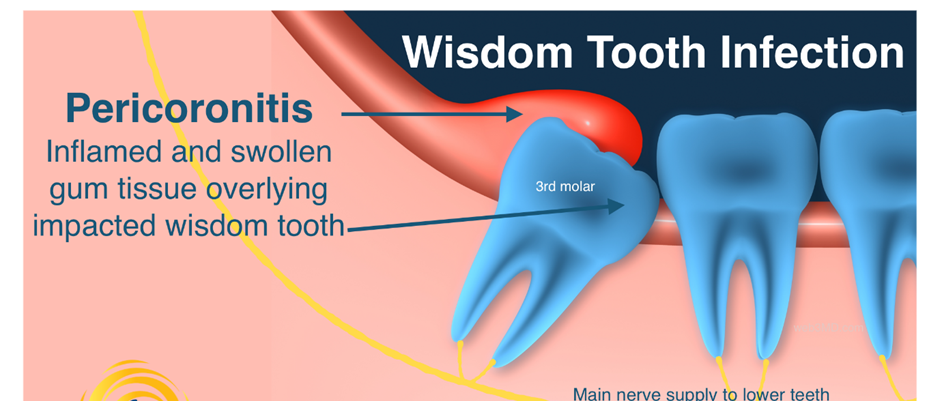
Your wisdom teeth, clinically called third molars, are the last teeth to come in, usually between the ages 17 and 25. By the time they arrive, your jaw is already full. There simply isn’t enough room, and that causes two major problems.
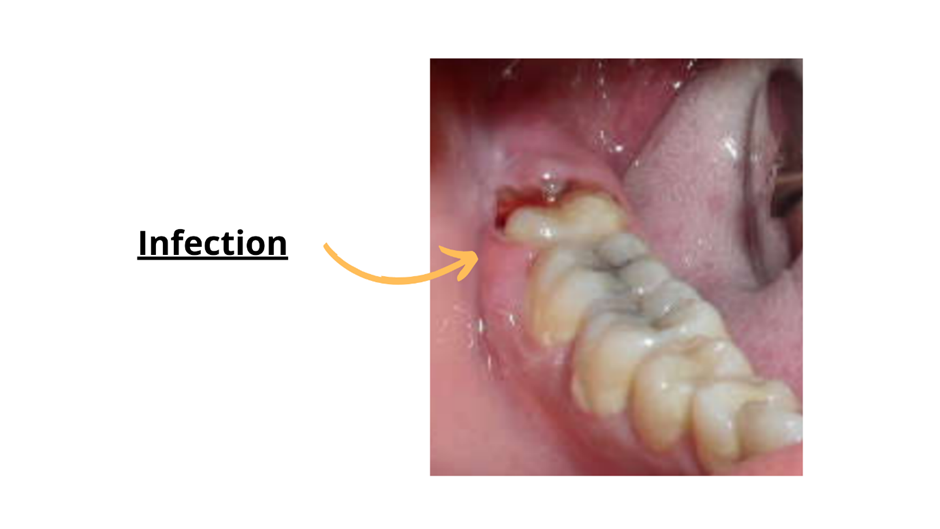
First, many wisdom teeth become impacted, meaning they can’t fully erupt through the gum. They get stuck at an angle, partially buried, with a flap of gum tissue sitting over them. That gum flap is a bacteria trap. Food debris slides under it, your toothbrush can’t reach it, and before long, you have the perfect environment for an infection. We call this condition pericoronitis, and it is one of the most common dental problems I treat.
Second, even when a wisdom tooth does fully erupt, it’s so far back in your mouth that most people can’t clean it properly. That means cavities form quickly, and once a cavity reaches the nerve, you’re dealing with a different type of infection, a pulp infection that can lead to a periapical abscess at the root tip.
Infected Wisdom Tooth Symptoms by Stage (Because Timing Matters)
Your symptoms will change and worsen over time. Knowing which stage you are in tells you how urgently you need care.
Stage 1: Early Signs (Days 1–3)
In the early stages, the infection is localized to the gum tissue around the tooth. The earliest infected wisdom tooth symptoms are easy to miss; most patients dismiss them as normal teething discomfort.
What you’ll feel:
- Tenderness and mild aching at the very back of your mouth, usually on one side. It may feel like a dull pressure or soreness, not dramatic, but persistently there.
- Slight redness or puffiness of the gum around the wisdom tooth. If you look in the mirror with a good light, the gum may look slightly darker pink or red compared to the other side.
- Mild sensitivity when chewing, especially if food catches on the area.
- A faintly bad taste in the back of your mouth. This is one I really want you to pay attention to. It is easy to dismiss. But that taste is early drainage from an inflamed gum pocket, and it is a genuine early warning sign.
What’s happening inside: Bacteria have colonized the space between your wisdom tooth and the overlying gum. Your immune system is responding, causing inflammation. The infection is still superficial.
What to do: Call your dentist. Don’t wait to see if it improves. At this stage, treatment is often simple, a professional irrigation of the area, advice on cleaning technique, and possibly a short course of antibiotics. The window for easy treatment is wide open right now.
Stage 2: Progressing Infection (Days 3–7)
If early infected wisdom tooth symptoms go untreated, the infection deepens and the signs become much harder to ignore.
What you’ll feel:
- Pain that is now throbbing and more constant. This is a key distinction i explain to patients: eruption pain comes and goes in waves as the tooth moves; infection pain builds and doesn’t back off. If you took ibuprofen four hours ago and the pain is already creeping back, that is not eruption discomfort.
- Pain that radiates. The infection can irritate the inferior alveolar nerve, the nerve running through your lower jaw, which causes pain that spreads toward your ear, temple, or throat. Many patients at this stage tell me they thought they had an ear infection.
- Noticeable swelling of the gum, and possibly early puffiness of the cheek.
- Swollen lymph nodes under your jaw or on the side of your neck. These are your body’s immune glands working overtime. If you run your fingers along your jawline and feel tender, firm lumps, pay attention.
- Bad breath that doesn’t go away after brushing, caused by bacterial activity and early pus production in the pocket.
- Difficulty opening your mouth fully. This is called trismus, and it happens when inflammation starts to affect the muscles of chewing. If you can’t open your mouth as wide as you normally can, the infection is no longer just in the gum.
What’s happening inside: The infection is beginning to move beyond the gum surface. Bacteria may be reaching deeper tissue.
What to do: You need to be seen urgently, same day if possible. At this stage, antibiotics are almost certainly needed, and an X-ray is required to assess how far things have gone. Don’t take antibiotics a friend has lying around at home. They may be the wrong type, the wrong dose, or insufficient in duration.
Stage 3: Serious or Spreading Infection (Beyond Day 7, or Sooner if Severe)
This is where infected wisdom tooth symptoms stop being just painful and start becoming genuinely dangerous. A wisdom tooth infection that has been left untreated or treated inadequately can spread beyond the jaw into the neck, the airway, or the bloodstream. This is not me being dramatic for effect. I have personally referred patients to the emergency department at this stage.
Warning Signs that Require Emergency Care Today
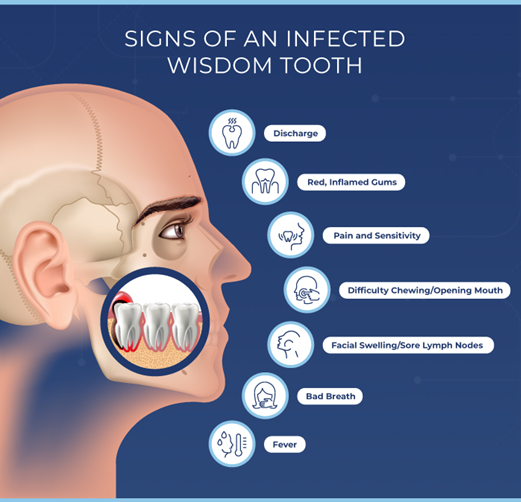
- Fever above 38°C / 100.4°F, especially combined with jaw or tooth pain. A fever means your infection is now systemic; your whole body is fighting it.
- Severe facial or jaw swelling that is firm, warm to the touch, or extending toward your neck.
- Inability to open your mouth more than two finger-widths. This level of trismus indicates the infection has spread into the muscles and deeper jaw spaces.
- Difficulty swallowing or breathing. This is a genuine emergency. If you are having trouble swallowing or feel tightness in your throat, you need to go to the emergency room, not a dental clinic, right now.
- Pus visibly draining from the gum around the tooth. While this might seem like a relief (pressure release), it signals an abscess that requires immediate drainage and likely extraction.
- Feeling generally unwell, fatigue, chills, nausea. These are signs that infection may be entering the bloodstream (sepsis), which is a medical emergency.
The One Thing Patients Always Ask Me: Is This Eruption Pain or Infection?
One of the most searched questions I get is how to tell infected wisdom tooth apart from normal eruption discomfort. Here is how I explain the difference:
| What to Check | Eruption Discomfort | Infection Pain |
| Pattern | Comes and goes over days/weeks | Builds progressively, doesn’t fully go away |
| Responds to ibuprofen | Usually yes, reliably | Partially, and only briefly |
| Worsens at night | Sometimes | Almost always , lying down increases blood pressure in the area |
| Associated with swelling | Mild, short-lived | Persistent or worsening |
| Taste/smell | No change | Foul taste or bad breath |
| Jaw stiffness | None | Can be present |
| Lymph nodes | Normal | Tender and enlarged |
Treating Infected Wisdom Tooth Symptoms: Why Antibiotics Alone Are Not Enough
I want to address something I frequently hear patients say: “My doctor gave me antibiotics, so I’m fixed. “Many patients assume that once they have medication, their infected wisdom tooth symptoms will disappear for good.
Antibiotics, usually amoxicillin (or metronidazole in combination for more severe cases, or clindamycin if you’re penicillin-allergic), are an essential part of treatment. They reduce the bacterial load and bring the acute infection under control. But they don’t fix the underlying problem, which is the tooth itself.
Think of it this way: if your kitchen drain keeps backing up, you can pour bleach down it every few weeks, and it will help temporarily. But unless you actually clear what’s clogging the pipe, the problem keeps coming back.
The same logic applies here. Once the infection is resolved with antibiotics, your dentist will need to either:
- Extract the wisdom tooth, the most definitive solution and the one most commonly recommended for impacted or recurrently infected wisdom teeth.
- Perform an operculectomy, surgically removing the gum flap covering a partially erupted tooth, which may be appropriate in select cases where the tooth position is otherwise acceptable.
- Provide ongoing monitoring with strict hygiene instructions, usually only for wisdom teeth that are fully erupted, properly positioned, and accessible to clean.
The decision depends on your X-ray findings, the tooth’s position, and how many times you’ve had this problem before. A single infection in a well-positioned wisdom tooth might be managed conservatively.
What You Can Do at Home While You Wait for Your Appointment
While waiting for your appointment, you can manage infected wisdom tooth symptoms at home, but only as a temporary measure, never a cure.
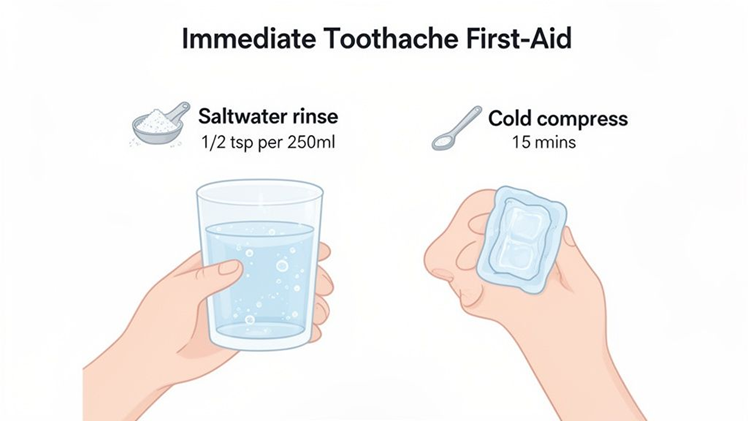
- Warm salt water rinses, half a teaspoon of salt in a glass of warm water, gently swished around the affected area several times a day. This reduces bacteria and soothes inflamed tissue.
- Ibuprofen (if safe for you), ibuprofen is anti-inflammatory as well as pain-relieving, which makes it more effective than paracetamol/acetaminophen for dental pain. Take the correct dose, consistently, with food.
- A cold pack on your cheek, 15 minutes on, 15 minutes off, can reduce swelling.
- Keep the area as clean as possible, use a soft toothbrush, rinse after eating, and try to gently clear food debris from around the tooth.
A Note on Timing: When I have Seen Things Go Wrong
Over the years in practice, the cases i have seen escalate most severely share a common theme: the patient waited too long because the first few days were bearable.
An infection that starts on a Monday with mild gum tenderness can, by the following weekend, be causing significant facial swelling and trismus. The curve of escalation is not linear; it can steepen rapidly. And infections never wait conveniently for business hours.
If your pain is worsening, if you develop a fever, if your jaw is stiffening, or if your face is swelling, that is not a “wait until Monday” situation. Most dental practices have an emergency line. Use it. And if you cannot reach a dentist quickly enough, go to your nearest emergency department.
Final Word From Your Dentist on Infected Wisdom Tooth Symptoms
An infected wisdom tooth is not just a dental inconvenience. It is a genuine infection, caused by living bacteria, capable of spreading, and requiring real treatment. Recognizing infected wisdom tooth symptoms early is genuinely one of the most important things you can do for your oral health and overall well-being.
Know the symptoms. Trust your instincts when something feels wrong. And please, don’t be the patient sitting in my chair telling me you waited two weeks because you thought it would sort itself out.