

 Medically reviewed by
 I still remember the moment I realized my dental crown had chipped. I was eating a normal meal when I felt something hard in my mouth. At first, I thought it was food, but after touching my tooth, I noticed a rough edge. A piece of my crown had broken off.
My first thought? “How bad is this? How much is it going to cost me?” If you’ve found yourself in a similar situation, you’re not alone. After researching the problem and speaking with my dentist, I learned that chipped crowns/Chipped Tooth Crown are more common than I thought. The good news is that many can be repaired or replaced without major complications.
I will share what I learned about the causes of a chipped tooth crown, the available treatment options, the costs involved, and the steps I took to restore my smile and protect my dental health.
What Is a Chipped Tooth Crown? (And Why It’s More Common Than You Think)
A dental crown is a cap placed over a damaged or weakened tooth to restore its shape, strength, and appearance. Crowns are typically made from porcelain, ceramic, porcelain-fused-to-metal (PFM), or full metal alloys.
PFM crowns have a metal base for strength with a porcelain exterior for appearance, which can sometimes lead to a “dark line“ at the gum line over time.
While crowns are designed to be durable, often lasting 10 to 15 years or longer, they aren’t indestructible. Porcelain and ceramic crowns, in particular, can chip under enough force, just like a natural tooth can crack. Crown fractures are among the leading reasons patients return to the dentist after restorative work. The good news is that not every chip means starting from scratch.
Why My Dental Crown Chipped When I Least Expected It
When my crown chipped, I was genuinely surprised. I had always assumed crowns were strong enough to handle everyday eating without any problems.
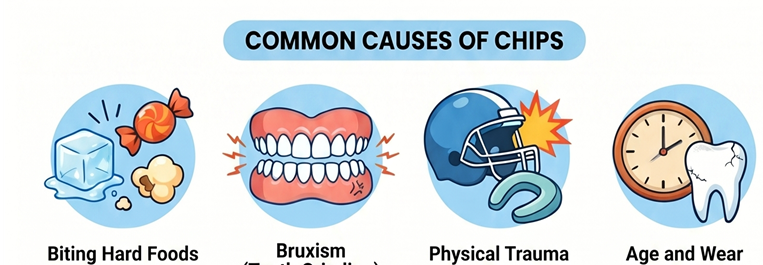
After talking with my dentist, I learned the causes of a Chipped Dental Crown.
- Biting hard foods. Ice, hard candy, nuts, popcorn kernels, and crusty bread all put extreme pressure on crowns. Even one unlucky bite can cause a fracture.
- Bruxism or grinding. Grinding teeth at night, accidental bumps, and years of daily use can all cause a crown to chip.
- Trauma or injury. A fall, sports collision, or accidental hit to the mouth can chip a crown in an instant.
Age and wear. Older crowns, particularly those nearing the end of their lifespan, are more vulnerable. Years of chewing create microscopic stress fractures that eventually give way. - Poor bite alignment. If your bite puts uneven pressure on the crown, certain spots bear more force than they should, increasing the risk of chipping over time.
The First Things I Did After Discovering the Chip
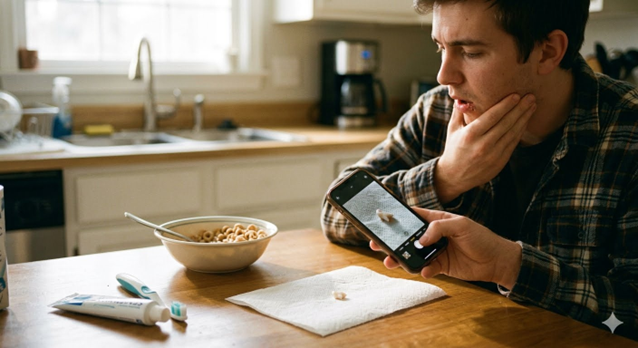
The moment I felt that rough edge on my tooth, I stopped chewing and checked my crown in the mirror. My biggest concern was whether the tooth underneath had been damaged. To avoid making things worse, I avoided hard foods and scheduled a dental appointment as soon as possible.
Repair or Replace? Understanding Your Treatment Options
This is the question everyone asks first. The honest answer: it depends on the extent of the damage. Here’s how dentists typically break it down.
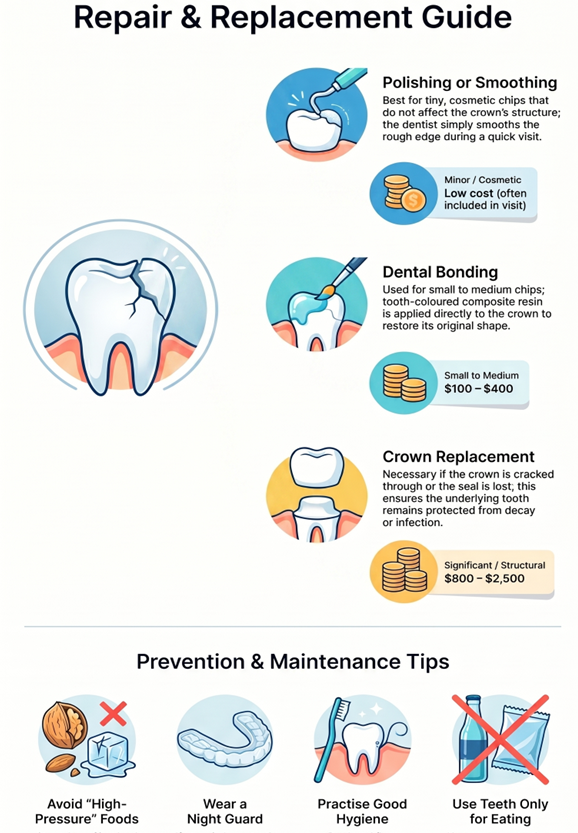
Option 1: Polishing or Smoothing (Minor Chips)
If the chip is tiny and purely cosmetic, meaning the crown is still structurally sound, your dentist may simply smooth and polish the rough edge. This is quick, inexpensive, and requires no numbing or lab work.
Option 2: Dental Bonding (Small to Medium Chips)
For slightly larger chips, composite resin (the same tooth-colored material used for fillings) can be bonded directly to the crown to restore its shape. Dental bonding is typically done in one appointment and is considerably cheaper than a full replacement. It works especially well on front teeth where aesthetics matter.
Option 3: Crown Replacement (Significant Damage)
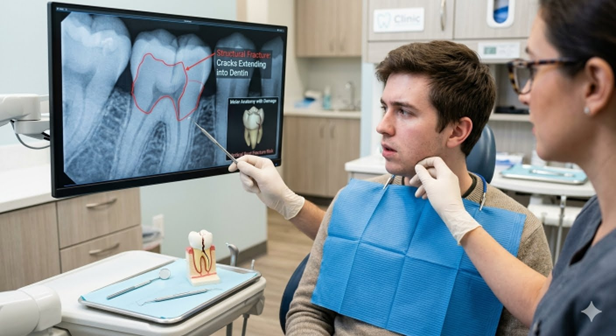
If the chip is large, the crown is cracked through, or the structural fit is compromised, your dentist will recommend a full replacement. While this is the more expensive route, it’s often the safest long-term choice, especially if the underlying tooth is at risk of infection or further damage.
How Much Does It Cost to Fix a Chipped Crown?
Cost is one of the first things people want to know, so let’s be direct about it. Prices vary by location, dentist, and type of treatment:
- Polishing/smoothing: Often included in an office visit fee, or very low cost.
- Dental bonding: Typically, $100–$400 per tooth, depending on the extent of the repair.
- Crown replacement: Usually $800–$2,500 depending on the material (all-ceramic, PFM, or full gold) and your location.
- Dental insurance: Many plans cover a portion of crown replacement, especially if it’s deemed medically necessary. Always check your coverage before agreeing to a treatment plan.
Pro Tip: Ask your dentist for an itemized estimate before any work begins. This makes it easier to compare what your insurance will cover versus what comes out of pocket.
How Long Do Dental Crowns Last And Can You Make Them Last Longer?
Most dental crowns last between 10 and 15 years, though many last significantly longer with good care. The material plays a role, full metal crowns tend to be the most durable, while all-ceramic crowns are the most lifelike but slightly more prone to chipping.
Since going through this experience, I’ve become much more mindful of my dental habits Here’s what actually makes a difference:
- Avoid chewing ice, hard candy, and extremely crunchy foods. It’s not worth the risk.
- Wear a night guard if you grind your teeth. Bruxism is one of the most common causes of crown damage. A custom night guard from your dentist is one of the best investments you can make.
- Brush and floss consistently. Keeping the gum line around the crown healthy prevents decay from forming at the margins.
- Attend regular dental checkups. Your dentist can catch early wear or fit issues before they become bigger problems.
- Avoid using your teeth as tools. Opening bottles, tearing packaging, or biting nails all put unnecessary stress on your crowns.
My Honest Takeaway After Going Through This
Reflecting on the process,a chipped crown felt far scarier in the moment than it turned out to be. The most important thing I did was act quickly rather than hoping it would somehow sort itself out.
Once my dentist examined it, the path forward was clear and far more manageable than I’d imagined. The key takeaway: don’t ignore it. A small chip can turn into a bigger, more expensive problem if the crown loses its protective seal or the tooth underneath becomes exposed.
If you’re dealing with a chipped crown right now, call your dentist today. The sooner it’s evaluated, the more options you’ll likely have.
FAQ’s
Can a chipped dental crown be repaired?
Yes, minor chips can often be repaired with bonding or polishing, while larger damage may require replacement.
Is a chipped crown a dental emergency?
Not always, but you should contact a dentist promptly to prevent further damage.
How much does it cost to fix a chipped crown?
Costs vary depending on whether the crown is repaired or replaced and your location.
Can I eat with a chipped crown?
It’s best to avoid chewing on the affected side until a dentist evaluates the crown.
How long do dental crowns last?
Many crowns last 10–15 years or longer with proper care.