

 Medically reviewed by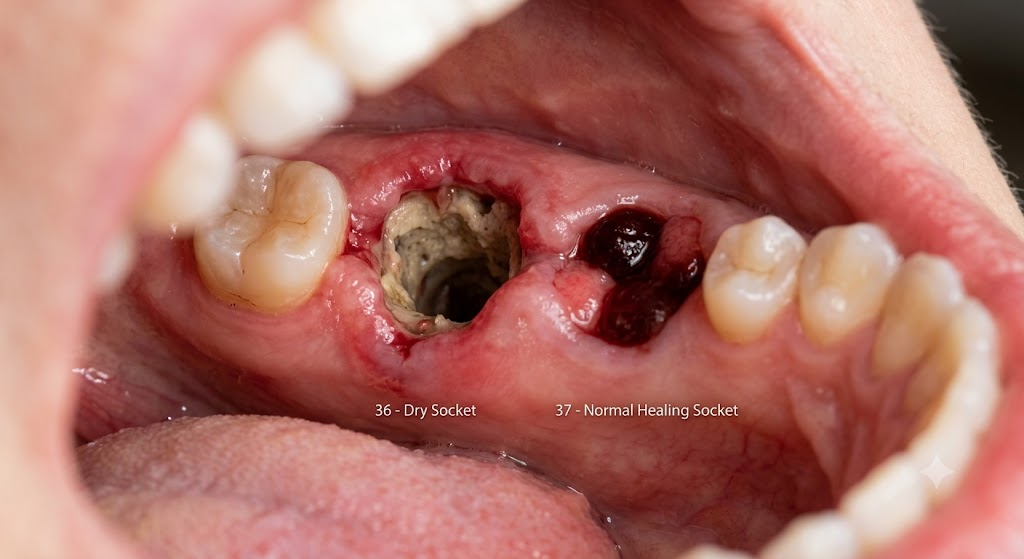
If you are searching for dry socket symptoms and treatment, there is a good chance you are sitting somewhere right now with a tooth extraction site that is throbbing, and it feels worse than it did yesterday, not better.
That pattern, pain that worsens instead of improving, is the most important thing I want you to understand about dry socket. Normal healing goes in one direction: gradually, steadily better. Dry socket goes in the other direction. And the sooner you recognise it, the faster I can get you out of pain.
I treat dry socket in my clinic regularly. It is one of the most common post-extraction complications i see, particularly after lower wisdom tooth removals, and it is also one of the most misunderstood. Patients often wait four or five days thinking they are just “healing slowly” when in reality they have a completely treatable condition that responds very quickly to the right care.
I will tell you everything you genuinely need to know: what dry socket actually is, every symptom to look for, exactly what treatment involves, how long it lasts, and what you can do to prevent it from happening in the first place.
What is Dry Socket?
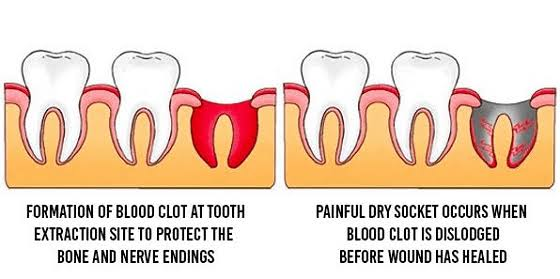
When a tooth is extracted, your body immediately begins to form a blood clot inside the empty socket. That clot is not just there to stop bleeding. It is doing several important jobs simultaneously: protecting the underlying bone and nerve endings from air, food, and bacteria; providing the cellular scaffolding for new tissue to grow across the socket; and acting as the foundation for your healing.
Dry socket, clinically known as alveolar osteitis, occurs when that blood clot either fails to form properly, dissolves too early, or gets dislodged before the socket has healed. When the clot is gone, the bone and nerve endings beneath it are left completely exposed. Exposed bone in a moist oral environment, filled with bacteria and food particles, is extraordinarily painful, and it cannot heal normally until the socket is protected again.
According to research published in the NIH’s PMC clinical database, dry socket affects approximately 2–5% of all routine extractions, but that figure rises steeply to between 20–30% for lower wisdom tooth removals, which is why I always give extra post-operative instructions to patients after those procedures specifically.
The term “dry socket” has been used in dental literature since 1896. It is not a new problem. But what has improved dramatically is how quickly and effectively we can treat it; most patients feel substantial relief within an hour of the right treatment being applied.
Dry Socket Symptoms: What to Look and Feel For
Recognising dry socket symptoms early makes a significant difference to how quickly you recover. Here are all the symptoms I look for clinically and what I tell patients to watch for at home.
Pain That Gets Worse, Not Better
This is the defining feature. After any tooth extraction, you expect to feel pain; that is completely normal. What is not normal is pain that increases day by day instead of gradually easing.
Dry socket pain typically begins 2–4 days after the extraction. It is described as a deep, throbbing, persistent ache that radiates outward, along the jaw, toward the ear, into the temple, sometimes down the neck. Ibuprofen takes the edge off briefly but never fully controls it. You wake up at night with it. Lying down makes it worse.
If that description sounds familiar, and you are 2–5 days post-extraction, you almost certainly have dry socket.
Visible Empty or White Socket
If you carefully look in the mirror at the extraction site with a torch, a healthy healing socket will show a dark red or maroon blood clot sitting in the socket, sometimes with pale new tissue beginning to form at the edges.
A dry socket looks different. The socket appears empty, larger than expected, and the surface inside may look white or grey; that is exposed bone. Sometimes there is no clot visible at all. This visual sign, combined with worsening pain, confirms the diagnosis in most cases before any clinical examination is even needed.
Radiating Pain to the Ear, Jaw or Temple
The exposed bone in a dry socket irritates the inferior alveolar nerve, the major sensory nerve running through the lower jaw, and this causes pain that does not stay localised. Patients frequently call me convinced they have developed an ear infection in the days after a tooth extraction. They have not. The ear pain is referred pain from the socket, travelling along the nerve pathway.
This radiating quality of dry socket pain is one of the distinguishing features that separates it from normal post-extraction discomfort, which tends to stay localised to the extraction site.
Unpleasant Taste or Bad Breath
With the blood clot gone, the socket becomes an open cavity that traps food particles and harbours bacteria. This produces a distinctive foul taste in the mouth that does not resolve with brushing or rinsing, and bad breath that your partner or family may notice before you do.
Importantly, this is not the same as infection; dry socket itself is not primarily an infectious process, but the bacterial environment created by an unprotected socket does increase the risk of secondary infection developing if the condition is left untreated.
Pain That Does Not Respond Adequately to Over-the-Counter Painkillers
Normal post-extraction pain responds reasonably well to ibuprofen and paracetamol taken consistently. Dry socket pain is different; patients tell me that they are taking the maximum dose and it is not touching it, or it brings the pain down from a 9 to a 6 but no further.
This relative resistance to standard analgesia is clinically meaningful. If your extraction pain is not being adequately controlled by regular-dose ibuprofen 3–4 days after the procedure, that is a strong signal to call your dental practice.
Pain That Worsens at Night and When Lying Down
Just as with wisdom tooth infections, dry socket pain intensifies when you lie flat. Lying down increases blood pressure and vascular flow in the area, which amplifies the pain from exposed nerve endings. Patients often describe sleeping propped up on pillows or waking in the early hours with throbbing jaw pain.
Dry Socket vs Normal Healing: The Key Differences
This is the most asked question after extractions, and understandably so, because the distinction between “this is just healing” and “I have dry socket” is not always obvious from the inside.
Here is how I explain it to patients:
| 🔍 What to Check | ✅ Normal Healing | 🔴 Dry Socket Symptoms |
| Pain pattern | Improves gradually day by day | Gets worse 2–4 days after extraction |
| Response to ibuprofen | Good, reliably controlled | Poor, barely touches the pain |
| Socket appearance | Dark clot visible, getting smaller | Empty, white or grey bone visible |
| Taste/breath | Normal | Foul taste, persistent bad breath |
| Radiating pain | Localised to site | Spreads to ear, jaw, temple |
| Worsens lying down | Mild, short-lived | Consistently worse at night |
| Day pain typically peaks | Day 1–2 then reduces | Day 3–5 and still building |
What Causes Dry Socket and Why Some People Are at Higher Risk
- Smoking is the most significant modifiable risk factor. Research published in PMC confirms a clear link between smoking and dry socket, for two reasons. The chemicals in tobacco impair the blood clotting process and slow tissue healing. Additionally, the suction motion of smoking can physically dislodge the clot. I tell every smoker undergoing extraction: do not smoke for a minimum of 72 hours afterwards, and ideally for a full week.
- Oral contraceptive pills are a risk factor many patients are surprised by. A 2022 systematic review and meta-analysis found that women using oral contraceptives had a significantly higher risk of developing dry socket. The oestrogen in combined pills can interfere with normal clotting mechanisms. I always ask about contraceptive use before an extraction.
- Lower wisdom teeth carry the highest risk of all extraction sites; up to 30% of lower third molar extractions develop dry socket. The dense bone of the lower jaw has a different blood supply to the upper; the surgical access is more complex, and the anatomy makes the site harder to keep clean.
- Complex or traumatic extractions, where significant bone removal or tissue manipulation was needed, carry a higher risk than straightforward single-rooted extractions.
- Poor oral hygiene before extraction increases the bacterial load in the mouth and the risk of clot disruption.
- Using a straw after extraction creates negative pressure in the mouth, exactly the suction force needed to dislodge a freshly formed clot. Even one or two pulls through a straw in the first 48 hours can be enough.
- Vigorous rinsing or spitting in the first 24 hours is another common cause I see; patients want to clean the area but end up washing the clot out instead.
- Pre-existing infection at the extraction site increases dry socket risk.
Dry Socket Treatment, Exactly What Happens at the Dental Practice
Step 1: Examination and Confirmation
I will look at the socket visually and ask about your symptom pattern and timeline. Dry socket is a clinical diagnosis; it does not require an X-ray in most cases, though I may take one to rule out retained root fragments or other complications.
Step 2: Gentle Irrigation of the Socket
The socket is gently flushed with sterile saline or a medicated irrigant to remove food debris, bacteria, and any necrotic material from the empty cavity. This step alone often provides immediate partial relief because it removes the irritants sitting on the exposed bone.
Step 3: Medicated Dressing Placement
This is the core of dry socket treatment and the step that provides the most dramatic pain relief. I pack the socket with a medicated intra-alveolar dressing, typically containing eugenol (a naturally occurring compound derived from cloves with local anaesthetic and antibacterial properties), often combined with iodoform and butamben in formulations like Alvogyl.
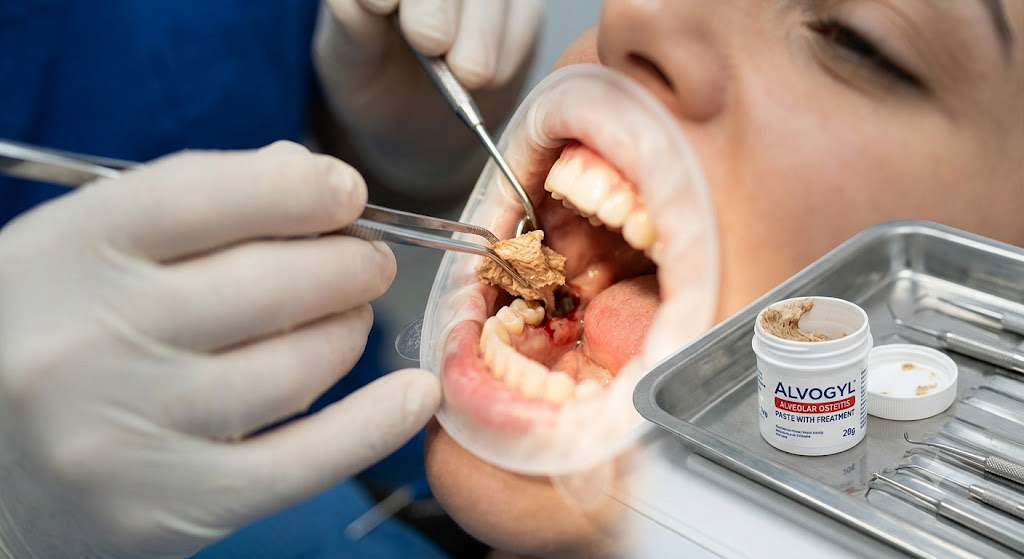
According to NIH PMC research on alveolar osteitis management, these intrasocket medicaments provide an obtundent effect, meaning they deaden the pain signal from the exposed nerve endings. At the same time, the socket begins to heal around the dressing. Most patients feel the pain begin to ease within 30–60 minutes of the dressing being placed.
Step 4: Dressing Changes and Follow-up
Depending on the severity, the dressing may need to be changed every 2–3 days until the socket shows signs of new tissue growing in from the edges. Most cases resolve within 7–10 days of initial treatment. I will always review the socket at each dressing change and adjust the treatment plan accordingly.
Step 5: Pain Management Between Visits
I will advise consistent use of ibuprofen (if appropriate for you) between dressing appointments. For severe cases, I may prescribe a short course of stronger analgesia. Importantly, antibiotics are not routinely prescribed for dry socket. Dry socket is primarily a wound-healing problem rather than an infection, and antibiotics do not address the exposed bone or accelerate healing of the socket.
How Long Does Dry Socket Last?
Without treatment: Dry socket pain typically peaks around days 3–5 and can persist at significant intensity for 7–10 days before very gradually improving as new tissue slowly grows across the exposed bone. The total healing process without treatment can take 3–4 weeks and is genuinely miserable throughout.
With treatment: Most patients experience dramatic pain relief within hours of the medicated dressing being placed. With appropriate dressing changes and follow-up, the majority of dry socket cases are well-managed within 7–10 days. Full socket healing continues over the following 2–4 weeks but is no longer painful.
The message is simple: treatment is fast, effective, and comfortable. Waiting is not.
Can Dry Socket Heal on Its Own?
Yes, technically, dry socket will eventually heal without intervention, as new granulation tissue slowly grows to cover the exposed bone. But this takes significantly longer and involves considerably more pain than treated dry socket.
I always advise patients not to wait it out. The treatment is straightforward, typically takes one short appointment, and provides relief within the hour. There is genuinely no benefit to suffering through it at home.
Home Care for Dry Socket Symptoms While Waiting for Your Appointment
If you recognise dry socket symptoms and are waiting for a dental appointment, these measures can help manage discomfort, but they are not a substitute for professional treatment:
- Ibuprofen taken consistently at the correct dose (with food) is the most effective over-the-counter option. It is both analgesic and anti-inflammatory.
- Gentle warm salt water rinses, half a teaspoon in a warm glass of water, can help keep the socket clean. Rinse gently; do not spit forcefully.
- Clove oil contains eugenol, the same active component used in professional dry socket dressings. A small amount on a cotton pellet placed gently into the socket can provide temporary relief. Do not pour it directly into the socket.
- Cold pack on the cheek, 15 minutes on, 15 minutes off, reduces pain and any associated swelling.
- Eat soft foods only; avoid anything that could enter and irritate the socket: seeds, rice, crunchy foods, carbonated drinks.
- Do not smoke; smoking at this stage will significantly worsen the condition and delay healing.
- Do not use a straw, the suction will worsen the exposed socket environment.
How to Prevent Dry Socket, What I Tell Every Patient Before They Leave
Prevention is always the better path. These are the instructions I give every patient without exception after an extraction:
First 24 hours, the most critical window:
- Do not rinse, spit, or gargle for the first 24 hours. The clot needs to stabilise undisturbed.
- Do not use a straw. The suction force is enough to dislodge the clot.
- Do not smoke or use any tobacco products for at least 72 hours, ideally 7 days.
- Bite gently on the gauze pad provided and keep it in place for the time instructed.
- Eat only soft foods, yoghurt, mashed potato, soup, scrambled eggs.
- Avoid hot drinks; heat increases blood flow to the area and can dissolve the clot.
Days 2–7:
- Begin gentle salt water rinses from day 2, but rinse by tilting your head, not by actively swishing or spitting.
- Keep the area clean but do not probe or poke it.
- If you are on the contraceptive pill, mention this before your extraction so I can time it appropriately (extractions mid-cycle when oestrogen levels are lower carry a slightly reduced risk).
- If any pain is worsening rather than improving. Do not wait.
Final Thoughts
I want to end with something I tell every patient who comes in embarrassed about calling back three days after their extraction: coming back is exactly the right thing to do.
Dry socket is not a sign that something went wrong during your extraction, and it is not a sign that you did anything wrong in the first 24 hours (though sometimes it is, see the prevention section). It is a recognised biological complication that happens to between 2 and 30 percent of extraction patients depending on the tooth involved. There is nothing to feel awkward about.
What matters is acting on dry socket symptoms early. One appointment. One medicated dressing. Most patients walk out feeling dramatically better than they walked in.
If your extraction pain is worsening rather than improving, especially 3–5 days after the procedure, do not sit at home taking ibuprofen and hoping it will resolve. Call your dental practice today and describe your symptoms. We will get you seen quickly, and we will get you comfortable.